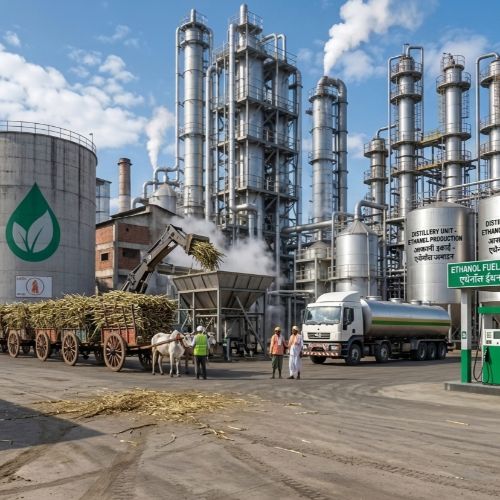
Sugar mill representatives in Karnataka have urged the government to increase the minimum selling price (MSP) of sugar and expand ethanol procurement, while concerns over alleged irregularities in sugarcane weighing also featured at a meeting with Deputy Chief Minister D.K. Shivakumar at Suvarna Vidhana Soudha on Monday.
The discussions covered the financial pressures facing sugar factories, transparency in cane procurement and proposals for government intervention in the management of cooperative sugar mills. The demands reflect industry concerns over rising production costs and the need to improve mill revenues to support payments to sugarcane farmers.
Sugar mills seek revision of minimum selling price
Sugar mill representatives called for an increase in the minimum selling price of sugar, arguing that the existing price has remained unchanged for years despite rising production costs.
They said a revision would help improve the financial position of sugar factories and strengthen their ability to meet higher sugarcane payment obligations.
The demand comes amid broader concerns within the sugar industry about the gap between the cost of procuring sugarcane and the revenue mills earn from sugar sales. Industry representatives have argued that improved realisations are necessary to maintain operational viability and ensure timely payments to growers.
Mills press for higher ethanol procurement
The representatives also sought an increase in the volume of ethanol procured from sugar factories.
Ethanol sales provide sugar mills with an additional revenue stream alongside sugar production. Millers argued that greater procurement would help improve their financial position and support their ability to meet farmers’ cane price expectations.
The demand highlights the importance of procurement policies to sugar-sector economics, particularly for factories that have invested in distillery capacity. The volume of ethanol purchased by oil marketing companies and the eligibility of different feedstocks can influence how mills allocate sugarcane and its by-products between sugar and ethanol production.
However, the meeting did not result in an announced increase in ethanol procurement.
Automated cane weighing raises transparency concerns
Allegations of irregularities in sugarcane weighing were another key issue discussed at the meeting.
Former minister H.K. Patil raised concerns that discrepancies in weighing at sugar factories could disadvantage farmers. He questioned the delay in implementing automated, unmanned weighing systems at factory entrances, despite previous assurances that such facilities would be introduced.
The proposed systems are intended to reduce human intervention and improve transparency in recording the quantity of cane delivered by growers.
Responding to the concerns, Minister Satish Jarkiholi cited technical and operational difficulties in deploying unmanned weighing facilities across all locations.
The issue is significant for farmers because the recorded weight of delivered sugarcane is a key factor in calculating payments. Automated systems could help improve traceability and reduce disputes over weighment, although implementation would require appropriate infrastructure and operational oversight.
Government management of cooperative sugar factory proposed
The meeting also considered a proposal for state government intervention in the management of cooperative sugar factories.
Yashavant Rayagouda Patil, MLA from Indi, suggested that the Karnataka government take over the operations of his sugar factory in north Karnataka as an experimental initiative.
He referred to reported financial assistance of ₹50 crore extended by the government to a cooperative sugar factory in Mandya district and proposed exploring a similar arrangement for his unit through government management.
Shivakumar indicated that the government would examine the proposal before making a decision. No takeover decision was announced in the source report.
Bioenergy Business Analysis
The demands raised by Karnataka’s sugar mills underline the close relationship between sugar pricing, ethanol procurement and the financial sustainability of integrated sugar factories. Sugar sales and ethanol supplies are important revenue streams, while procurement terms influence investment decisions and the utilisation of distillery capacity.
Higher ethanol procurement could provide mills with additional market opportunities, but the impact would depend on the quantities allocated, eligible feedstocks and applicable procurement prices. Any changes would also need to be considered alongside sugar availability, cane costs and the requirements of India’s ethanol-blending programme.
Meanwhile, concerns about cane weighing highlight a separate but equally important issue: transparent measurement and reliable payment systems for farmers. Automated weighing infrastructure could strengthen accountability, provided technical challenges and implementation requirements are addressed.
The next developments to watch are whether the government responds to the mills’ pricing and procurement demands, and whether it advances plans for automated cane weighing or government involvement in cooperative factory management. The meeting itself should not be interpreted as confirmation that any of these proposals has been approved.