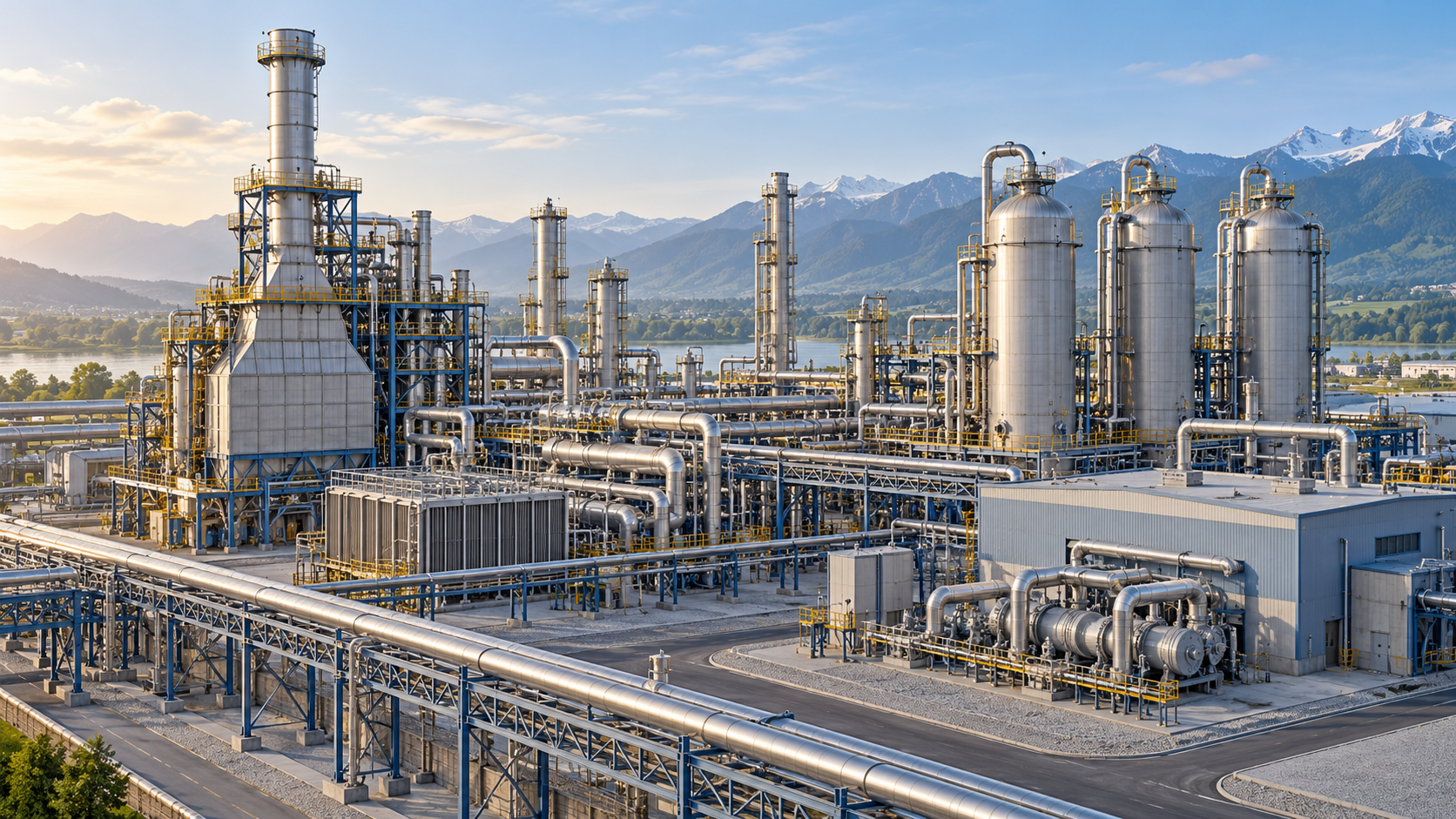
KBR has secured contracts to modernise two AGF Nitrogen ammonia plants in Germany and Austria, with lower natural gas consumption the main objective. The company announced the awards in an October 22 statement.
Ammonia upgrades at Linz and Wittenberg
The work covers LAT Nitrogen’s 550-tonne-per-day plant No. 2 in Linz and SKWP’s 1,900-tonne-per-day plant No. 2 in Lutherstadt Wittenberg. Both will receive KBR’s Reforming Exchange System (KRES). The German project also includes a new ammonia converter and synthesis-loop modifications.
KBR expects the revamps to improve energy efficiency and reduce carbon dioxide emissions. It has not disclosed contract values, completion dates or quantified savings. These remain projected benefits rather than reported operating results.
How KBR’s heat-recovery technology works
In its technical explanation of ammonia revamps, KBR describes KRES as a way to recover high-temperature heat from gas leaving the secondary reformer. That heat drives additional reforming of hydrocarbon feed in an exchanger, without a separate directly fired furnace for that step.
The distinction matters when assessing an ammonia upgrade: improving how a plant uses heat is a different engineering task from replacing its hydrogen feedstock. A revamp can target efficiency without necessarily expanding production capacity.
Efficiency upgrades and green ammonia take different routes
For comparison, Bioenergy Business recently covered Everllence’s compressor order for AM Green’s ammonia project in India, where an existing complex is being converted to renewable hydrogen-based production. The European contracts announced by KBR focus instead on improving existing gas-based operations.
To assess the eventual impact, readers will need operating data: gas consumed per tonne of ammonia, production rates and emissions measured on a consistent basis before and after commissioning. Until those figures are available, the awards establish the planned technical changes, rather than the scale of any achieved reduction.