


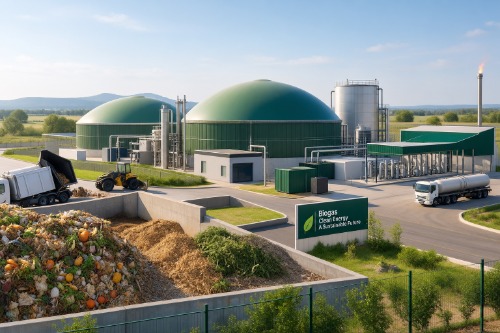
Turkey could unlock up to 10 billion cubic metres (bcm) of biomethane production annually by 2040 by upgrading existing biogas and landfill gas infrastructure, according to projections from industry association BİYOYATDER.
The expansion is being positioned as a means of reducing greenhouse gas emissions, improving the management of organic waste and lowering Turkey’s dependence on imported fossil fuels, particularly across transportation and logistics.
Turkey currently has 101 biogas facilities and 97 landfill gas plants. BİYOYATDER estimates that systematic upgrades to these existing assets could increase annual biomethane production to around 3 bcm by 2030, 5 bcm by 2035 and 10 bcm by 2040.
Existing infrastructure offers biomethane growth pathway
The proposed expansion would focus on upgrading Turkey’s existing biogas and landfill gas infrastructure rather than relying solely on new facilities.
According to BİYOYATDER, the country’s current plants already process approximately 10 million metric tonnes of organic waste each year and prevent around 18 million tonnes of carbon emissions.
The association believes that further investment in collection, upgrading and processing systems could substantially increase the amount of renewable gas recovered from these waste streams.
The projected production pathway envisages approximately 3 bcm of annual biomethane production by 2030, rising to 5 bcm by 2035 and reaching 10 bcm by 2040.
Waste methane mitigation linked to renewable fuel
Cemil Direkci, chairman of BİYOYATDER, said capturing methane from animal and agricultural waste is central to the environmental case for expanding biogas infrastructure.
Organic waste stored openly or in lagoons can release methane as it decomposes. According to Direkci, methane has a global warming impact 27 times greater than carbon dioxide.
The association argues that directing organic waste into biogas collection and processing systems can prevent methane emissions while converting the waste into a usable renewable fuel.
Biomethane could reduce fossil fuel imports
The projected expansion could have implications beyond waste management and emissions reduction.
BİYOYATDER estimates that operating upgraded facilities at full capacity could reduce annual emissions by up to 30 million metric tonnes, while also reducing Turkey’s requirement for imported fossil fuels used in transportation and logistics.
Direkci also pointed to potential trade benefits, including the mitigation of carbon-related customs costs associated with European Union trade compliance requirements.
Industry seeks long-term biomethane policy
BİYOYATDER is calling for a policy framework designed to provide greater revenue certainty for biomethane projects.
Among its proposals is a 12-year purchase guarantee for biomethane production, together with a minimum floor price of €60 per megawatt-hour. The association wants the floor price to be adjusted annually in line with eurozone inflation.
It is also seeking permission for licensed biomethane producers to sell directly into the market or export their output, provided they meet applicable technical requirements.
Such measures, according to the association, would provide project developers with greater visibility over future revenues and create additional routes to market for renewable gas.
Bioenergy Business Analysis
Turkey’s existing biogas and landfill gas fleet provides a potential platform for scaling biomethane without relying entirely on greenfield development. BİYOYATDER’s 2040 projection depends on systematic upgrades to these facilities and therefore points to the importance of investment in gas upgrading, collection and processing infrastructure.
The proposed policy measures would also influence the commercial viability of the expansion. Long-term offtake guarantees, a price floor and access to domestic and export markets could provide stronger revenue visibility for producers. However, the 3 bcm, 5 bcm and 10 bcm production figures are industry projections from BİYOYATDER, rather than confirmed government production targets.
Read also: Kanadevia Inova secures majority ownership of Dutch Biogas Platform BioValue