


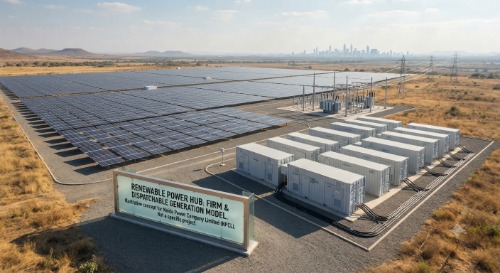
Noida Power Company Limited (NPCL) has sought approval from the Uttar Pradesh Electricity Regulatory Commission (UPERC) to procure 300 MW of firm and dispatchable renewable energy on a round-the-clock (RTC) basis for 25 years through tariff-based competitive bidding.
The proposal forms part of NPCL’s latest petition before UPERC and includes a request to approve deviations from the Ministry of Power’s guidelines governing procurement of firm and dispatchable renewable power from grid-connected renewable energy projects supported by energy storage systems.
NPCL has proposed procuring the entire 300 MW capacity from a single successful bidder, rather than dividing the tender capacity among multiple developers.
NPCL proposes single-bidder procurement
The proposed single-bidder structure would require a deviation from Clause 6.3 of the Ministry of Power’s June 9, 2023 guidelines.
Under that provision, a single bidder is restricted from receiving more than 50% of the bid capacity. NPCL has argued that the relatively small size of the proposed 300 MW tender supports allocating the full capacity to one successful bidder.
The company is seeking regulatory approval for this deviation as part of its wider procurement proposal.
The proposed tender would be conducted through a tariff-based competitive bidding process, with NPCL also seeking approval for draft tender documents, including the Request for Selection (RfS) and Power Purchase Agreement (PPA).
Renewable power to be supported by energy storage
The procurement is designed around firm and dispatchable renewable electricity rather than conventional intermittent renewable generation.
During proceedings, UPERC sought clarification from NPCL on the proposed capacity utilisation factor (CUF). NPCL stated that the project would require a minimum annual CUF of 75%, comprising a 50% CUF requirement during off-peak periods and 90% during specified peak hours.
The proposed procurement is expected to involve renewable energy projects paired with energy storage systems. Storage would enable electricity generated from renewable sources to be delivered according to the RTC requirements specified under the proposed procurement framework.
NPCL has also sought approval for provisions allowing a third party to establish a tie-up for the energy storage system.
UPERC seeks further justification from NPCL
UPERC has asked NPCL to provide additional information and justification on several provisions contained in the proposed tender documents.
These include requirements relating to the earnest money deposit (EMD), performance bank guarantee and net-worth criteria in the RfS.
The Commission has also sought clarification on the proposed treatment of consortium financial requirements, under which the aggregate financial requirement would be considered in proportion to the equity commitment of individual consortium members.
NPCL has been asked to justify a proposed deviation in Clause 5.3.5 of its RfS from the Ministry of Power’s June 9, 2023 guidelines.
Regulatory issues remain before final approval
UPERC has also raised questions concerning the proposed composition of the Commissioning Committee under the RfS and the proposed debarment of a Renewable Power Developer under Article 6.3 of the PPA in relation to the existing regulatory framework.
The Commission has directed NPCL to submit its justifications on the issues within two weeks of its order.
UPERC said it would take an appropriate decision after considering NPCL’s submissions.
At the same time, the Commission has permitted NPCL to proceed with its bidding documentation and issue a corrigendum if necessary, subject to the final order.
The Commission has emphasised that the developer must meet all prerequisites required to ensure electricity supply begins according to the scheduled timelines. This is particularly relevant to the proposed deviation that would allow the entire 300 MW bid capacity to be allocated to a single bidder.
Bioenergy Business Analysis
NPCL’s proposal illustrates the growing role of firm and dispatchable renewable power in utility procurement. Rather than procuring renewable electricity solely on an intermittent generation profile, the proposed structure combines renewable generation with energy storage to meet specified supply requirements throughout the day, including higher requirements during peak periods.
The proposal also highlights the regulatory complexity involved in designing large-scale renewable procurement tenders. The proposed single-bidder allocation, storage arrangements, financial eligibility provisions and developer obligations all require alignment with existing Ministry of Power guidelines and the regulatory framework.
For renewable energy developers and storage providers, the 300 MW procurement could create an opportunity if approved, but the immediate status remains regulatory. UPERC has allowed the bidding documentation process to continue subject to its final order, while requiring NPCL to provide further justification on the proposed deviations and tender provisions.