


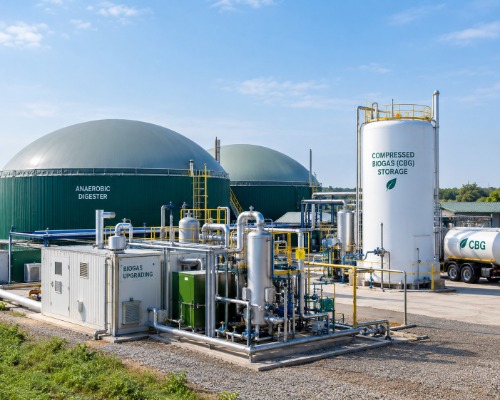
Petronet LNG Ltd. and Gruner Renewable Energy Pvt. Ltd. plan to invest an estimated ₹1,200 crore to develop 10 compressed biogas (CBG) plants across India under a proposed 50:50 joint venture, according to the details provided in Petronet LNG’s regulatory filing.
The proposed facilities will each have a production capacity of 18 metric tonnes per day (TPD), giving the planned portfolio a combined capacity of 180 TPD of CBG. The investment would expand Petronet LNG’s participation in India’s bioenergy sector while bringing the two companies together across the CBG value chain, from feedstock procurement to gas sales.
Petronet’s 17 September 2026 board approval filing had already outlined the proposed 50:50 venture, 10 plants and estimated ₹1,200 crore outlay.
The companies have signed a binding term sheet for the proposed venture, which is expected to be incorporated as a private limited company. Each partner will hold an equal shareholding, with board representation proportionate to its ownership stake.
Joint venture to cover the CBG value chain
The proposed joint venture will undertake activities spanning the development, production and commercialisation of compressed biogas. Its responsibilities will include sourcing feedstock, processing gas, compression, storage, transportation, distribution and sales.
The venture will also develop, operate and maintain the planned plants, while exploring additional opportunities in the broader bioenergy sector.
This integrated operating model would bring feedstock sourcing and plant operations together with the downstream logistics required to deliver CBG to customers. However, the available announcement does not specify the plants’ locations, feedstock mix, commissioning schedule or intended offtake arrangements.
At the estimated aggregate capital cost, the implied investment averages approximately ₹120 crore per plant. This is a simple portfolio average, not a disclosed plant-level budget; actual costs could vary depending on location, technology, feedstock handling and associated infrastructure.
The project’s eventual contribution to India’s CBG supply will depend on the plants being commissioned and achieving sustained production. The announced capacity represents planned output, rather than confirmed operational capacity.
For related Indian CBG development, see Mahanagar Gas and Organic Recycling Systems’ CBG project MoU. Internationally, Delorean’s SA1 biomethane operating licence illustrates a later regulatory milestone before commissioning.
Bioenergy Business Analysis
Petronet LNG’s proposed partnership with Gruner Renewable Energy represents a planned expansion into compressed biogas, a segment that connects renewable fuel production with organic waste management and agricultural resource utilisation.
The proposed 180-TPD portfolio could provide a platform for scaling CBG production across multiple locations. The 50:50 ownership structure also gives both partners an equal equity position, although the precise allocation of responsibilities, financing commitments and operational risks will depend on the definitive arrangements.
Petronet LNG’s broader CBG ambitions also provide relevant context. Its FY2023–24 annual report describes work towards establishing 25 CBG plants across India, including initial projects at government land parcels in Bahraich, Fatehpur and Kanpur Dehat in Uttar Pradesh. The new partnership should be considered alongside this existing programme, although the available information does not establish whether the proposed joint-venture plants overlap with, replace or operate independently of those projects.
For India’s bioenergy industry, the key development to watch is not simply the announced investment, but the transition from a proposed joint venture to commissioned facilities with dependable feedstock supply and commercially sustainable output. Further disclosures on locations, funding, construction milestones and gas sales will help establish the project’s likely contribution to domestic CBG capacity.


