


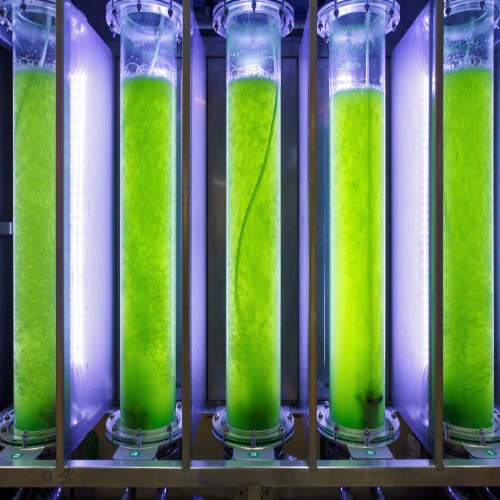
Mazda Motor Corporation is advancing research into microalgae-derived renewable diesel after its “Development of High-Density Microalgal Biofuel” project was selected for Japan’s FY2026 Programme to Develop and Promote the Commercialisation of Energy Conservation Technologies to Realise a Decarbonised Society, administered by the New Energy and Industrial Technology Development Organisation (NEDO).
The project will build on Mazda’s existing research into microalgae-based fuels, covering cultivation and lipid extraction. In collaboration with Japanese energy company Idemitsu Kosan, Mazda will also investigate producing fuel from the extracted lipids. The company aims to begin using the fuel as factory-fill fuel in all diesel vehicles manufactured at its Japanese plants in the early 2030s, subject to further development and practical deployment.
The initiative focuses on microalgae, which can produce oil-rich lipids in relatively limited spaces and may reduce pressure on food-crop resources and forests compared with some conventional biofuel feedstocks.
Mazda Builds on Microalgae Fuel Research
Mazda said it has been researching microalgae-derived fuels since the 2010s, including joint research with academic institutions and cultivation trials at its plants. Its work has focused on developing ways to produce lipids efficiently from microalgae and convert them into fuel.
According to the company, its research has established technology for efficient lipid production and demonstrated the ability to produce more than one litre of fuel in approximately two weeks using a 1,000-litre cultivation tank.
The newly selected project will extend this work across the production chain, from microalgae cultivation to lipid recovery and extraction. Mazda will lead research on cultivation and lipid extraction, while Idemitsu Kosan will cooperate on fuel production and refining.
Scaling up beyond laboratory and pilot conditions remains a key step before microalgae-derived fuel can be deployed commercially. The project’s practical prospects will depend on factors including productivity, processing requirements, fuel quality, production costs and the ability to secure a consistent feedstock supply.
HVO Targeted for Factory-Fill Use
Mazda describes the intended product as biodiesel fuel, specifically hydrotreated vegetable oil (HVO) refined from lipids extracted from microalgae. HVO is commonly referred to as renewable diesel and is chemically distinct from conventional fatty acid methyl ester (FAME) biodiesel.
The proposed factory-fill application would involve supplying the fuel for diesel vehicles built at Mazda’s plants in Japan. The early-2030s timeline is a company target rather than confirmation of a commercial launch or an established supply chain.
The approach could provide a renewable liquid-fuel option for compatible diesel engines without relying exclusively on electrification. However, its potential climate benefits will depend on the full lifecycle of production, including cultivation inputs, processing energy, transport and fuel use.
Mazda Links Biofuel Development to Energy Security
Commenting on the project’s selection, Mazda Chief Strategy Officer Takeji Kojima said wider adoption of microalgae-derived HVO could support Japan’s domestic energy self-sufficiency, sustainable regional development and industrial competitiveness.
The project aligns with Mazda’s broader work on carbon-neutral fuels and its multi-solution approach to reducing emissions. The company has also explored other renewable fuels and technologies as part of its efforts to address vehicle emissions.
For Japan, domestically produced renewable fuels could diversify transport-energy supply if production can be scaled economically. Microalgae offer a potential alternative to feedstocks that compete with food or require additional agricultural land, although the overall sustainability of any pathway must be assessed across its entire value chain.
Bioenergy Business Analysis
Mazda’s project is an example of an automotive manufacturer seeking to connect early-stage biofuel research with a defined end-use market. Its factory-fill target gives the research a practical application, while cooperation with Idemitsu Kosan links feedstock development with fuel production.
The central challenge is commercial scalability. Mazda’s reported cultivation result demonstrates research progress, but it does not establish the cost, yield or volume required for industrial production. The project’s significance will depend on whether microalgae cultivation and lipid extraction can deliver reliable feedstock at competitive costs and whether the resulting HVO meets the technical and sustainability requirements for vehicle use.
The early-2030s target should therefore be viewed as a deployment ambition, not a confirmed production commitment. Progress toward that goal will depend on further technical validation, fuel refining, supply-chain development and the economics of producing microalgae-derived renewable diesel at scale.
Related research: Coconut oil biofuel blends have also been tested in a micro jet engine, a separate study involving a different feedstock and aviation application.


