


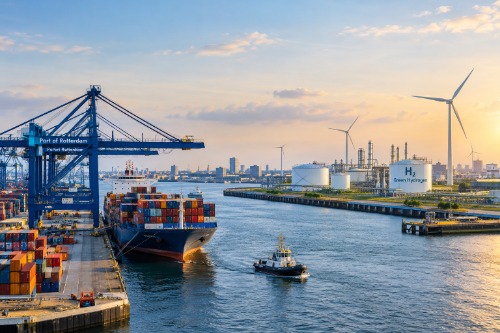
India and the Netherlands are exploring opportunities to deepen cooperation in green hydrogen, renewable energy, semiconductors and maritime infrastructure as both countries seek to expand trade, investment and industrial partnerships.
Union Commerce and Industry Minister Piyush Goyal discussed the opportunities during his visit to the Netherlands, including meetings with Dutch government officials, parliamentarians and industry representatives. The discussions focused on attracting investment into India, strengthening supply chains and expanding collaboration in technology-intensive and clean-energy sectors.
At the India-Netherlands Business Forum, Goyal and Dutch Minister for Foreign Trade and Development Cooperation Sjoerd Sjoerdsma discussed cooperation in green hydrogen, water management, semiconductors and resilient infrastructure. The broader engagement also covered manufacturing, research and development, logistics, renewable energy and digital technologies.
Green hydrogen and clean energy feature in bilateral discussions
Green hydrogen was among the clean-energy areas discussed during Goyal’s meetings with Dutch officials. The two countries are exploring ways to use their respective industrial capabilities and technical expertise to support cooperation in renewable energy and emerging technologies.
The discussions build on the wider India-Netherlands strategic partnership. The bilateral Strategic Partnership Roadmap for 2026–2030 identifies renewable energy, green hydrogen, bioenergy, renewable fuels, battery storage and maritime decarbonisation among areas for further cooperation.
The roadmap also envisages developing an action plan for renewable hydrogen cooperation, including the potential for a green corridor between India and the Netherlands. These priorities provide a framework for future collaboration, although the discussions reported during Goyal’s visit do not, by themselves, establish a new project or investment commitment.
Trade and investment ties remain a central priority
In his meeting with Sjoerdsma, Goyal discussed expanding bilateral trade, improving supply-chain resilience and attracting Dutch investment into India’s manufacturing, infrastructure, research and development, renewable energy, logistics and digital technology sectors.
The two sides also discussed the potential of the India-European Union free trade agreement (FTA) to expand market access and create additional opportunities for trade and investment.
The agreement’s potential benefits include stronger commercial links and more diversified supply chains. However, its implementation depends on the applicable approval and ratification processes.
The broader trade discussions reflect efforts to connect industrial partnerships with technology development and investment across priority sectors.
Semiconductor cooperation and advanced manufacturing
Goyal also met Dutch Minister of Economic Affairs and Climate Policy Heleen Herbert to discuss cooperation in semiconductors, green hydrogen, clean energy, critical minerals and advanced manufacturing.
Semiconductors are an important area of bilateral technology cooperation, given the role of specialised equipment, research, skilled talent and manufacturing capabilities in the global chip supply chain.
The India-Netherlands strategic roadmap identifies semiconductor research, industry collaboration, talent development and resilient supply chains as priorities. It also provides for stronger connections between Dutch semiconductor expertise and India’s semiconductor ecosystem.
For India, closer cooperation could support its efforts to expand domestic manufacturing capabilities and develop technology partnerships. The commercial impact will depend on how these discussions translate into research collaborations, investment and industrial projects.
Port of Rotterdam visit highlights maritime infrastructure
During his visit to the Port of Rotterdam, Goyal toured the facility aboard a port vessel alongside its chief executive, Boudewijn Siemons. Discussions focused on logistics efficiency, supply-chain connectivity and opportunities to modernise Indian ports and develop advanced maritime infrastructure.
The Netherlands’ experience in port operations and logistics offers a potential basis for knowledge-sharing and technical cooperation with India. Areas of interest include efficient cargo movement, sustainable port development and stronger connections between maritime transport and wider supply chains.
The two countries have also identified green ports, shipping and a potential Green and Digital Sea Corridor as areas for cooperation under their broader maritime partnership.
Regional and institutional cooperation
Goyal also interacted with members of the Dutch Parliament, with discussions covering institutional ties, market access, supply-chain diversification and investment opportunities.
In a separate meeting, he and Arthur van Dijk, King’s Commissioner for Noord-Holland, explored opportunities to strengthen high-technology cooperation between India and the Netherlands.
These engagements complement the bilateral discussions on trade, technology and clean energy, with both countries looking to build stronger links between government institutions, businesses and research organisations.
Bioenergy Business Analysis
The India-Netherlands discussions are relevant to the clean-energy sector because they place green hydrogen and renewable energy within a wider framework of industrial, technological and infrastructure cooperation.
The 2026–2030 strategic roadmap also explicitly includes bioenergy, bio-based chemicals, circular feedstocks, biofuels and waste-to-energy cooperation. This creates potential avenues for collaboration beyond hydrogen, including technology partnerships, research, investment and sustainable industrial development.
For India’s energy transition, the key question is whether these policy priorities lead to concrete commercial outcomes. Progress could be assessed through project announcements, investment commitments, research partnerships, technology transfers and developments in renewable hydrogen and maritime decarbonisation.
At this stage, the reported meetings indicate areas of shared interest rather than confirmation of new green hydrogen projects or investment deals. Follow-up agreements and implementation plans will determine how quickly the discussions translate into measurable outcomes.


