


Kerala has sought the Union government’s intervention to obtain samples of pure petrol from oil marketing companies (OMCs), saying the reference fuel is required to accurately determine the ethanol content of petrol sold at retail outlets across the state.
Food and Civil Supplies Minister Anoop Jacob has written to Union Petroleum and Natural Gas Minister Hardeep Singh Puri and Minister of State Suresh Gopi, requesting their intervention to ensure that the required samples are provided without further delay.
The state government initiated inspections following public concerns about the possible effects of E20 petrol on vehicle engines. Over the past two weeks, the Civil Supplies Department collected petrol samples from retail outlets across Kerala and submitted them to the State Chemical Examiners’ Laboratories for analysis.
However, laboratory officials informed the department that pure petrol samples were necessary to establish reference standards and accurately measure the ethanol concentration in the collected fuel.
Laboratories require reference samples for accurate testing
According to Jacob’s letter, Indian Oil Corporation (IOC) and Bharat Petroleum Corporation (BPCL) had initially agreed to provide the required pure petrol samples but subsequently withdrew their commitment. Repeated attempts by senior state government officials to obtain the samples have also reportedly been unsuccessful.
The reference samples are required to prepare calibration standards and generate calibration curves, which laboratories use to establish a baseline for measuring ethanol content. Without this reference material, technicians cannot complete the prescribed calibration and comparative analysis reliably.
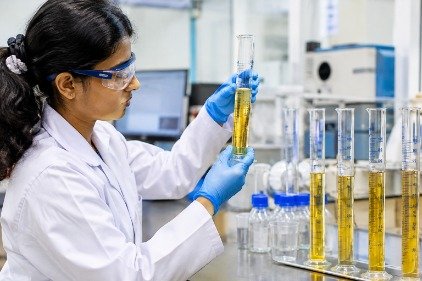
The laboratories have recommended following the testing procedure prescribed under Indian Standards, which uses a 150 ml glass cylinder to determine the ethanol content in petrol.
Jacob has emphasised the importance of using the prescribed method, particularly because the test findings could face legal scrutiny. Oil companies had challenged the results of Karnataka’s earlier testing exercise, citing concerns over the methodology used.
Karnataka’s ethanol-content claims prompt state inspections
Kerala’s testing exercise follows allegations by the Karnataka government that petrol samples collected in the state contained ethanol at levels exceeding the prescribed 20% limit.
The allegations have brought renewed attention to the testing procedures used to verify ethanol blending levels in retail petrol. Oil marketing companies have questioned the methodology behind Karnataka’s findings, maintaining that the fuel supplied complies with the applicable Indian Standard for ethanol-blended petrol.
Kerala is seeking to conduct its own assessment using the prescribed testing procedure and appropriate reference samples.
Kerala says testing is intended to address public concerns
Jacob clarified that the state’s inspection programme is not intended to question the credibility of oil marketing companies. Instead, it aims to address public concerns about whether petrol sold in Kerala contains ethanol beyond the permissible limit.
The minister has asked the Centre to facilitate the supply of pure petrol samples so that state laboratories can complete their analysis and establish the actual ethanol content in the fuel collected from retail outlets.
The results of the ongoing testing have not yet been reported. The state’s assessment will depend on obtaining the required reference samples and completing the laboratory procedures.



