


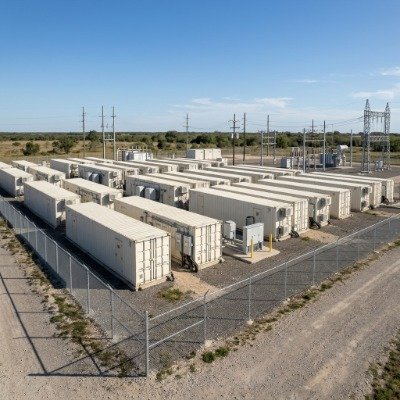
Larsen & Toubro (L&T) has secured an order to develop a 300 MW/900 MWh battery energy storage system (BESS) at Khavda in Gujarat, as the company expands its involvement in India’s energy storage sector.
The order was jointly secured by L&T’s Renewables business and L&T Electronic Products & Systems (LTEPS), according to the company’s announcement on 25 November 2026.
L&T has classified the contract as a ‘Significant’ order, a category covering projects valued between ₹1,000 crore and ₹2,500 crore under its internal order-classification system. The company has not disclosed the exact contract value.
The proposed battery storage system will have a power capacity of 300 MW and an energy storage capacity of 900 MWh, enabling it to discharge electricity at its rated power for up to three hours.
The facility is designed to store surplus renewable electricity during periods of high generation and release it when demand increases. This will help improve the utilisation of renewable power while providing greater flexibility to the electricity grid.
Liquid-cooling technology planned for battery storage system
The Khavda BESS will incorporate liquid-cooling technology, which L&T said is intended to provide higher power density, improved safety and a longer operational life.
Thermal management is an important consideration for utility-scale battery energy storage systems. Batteries generate heat during charging and discharging, and cooling systems help maintain operating temperatures within the required range.
Liquid-cooling technology is used to manage heat within battery systems and support consistent operating conditions. Its application in the Khavda project is expected to support the system’s performance and operational requirements.
L&T said the project would strengthen grid flexibility and help integrate a greater share of renewable energy into India’s electricity network.
Battery storage to support renewable energy integration
Battery energy storage systems can help address the mismatch between renewable electricity generation and power demand.
Solar generation, for example, is concentrated during daylight hours, while electricity demand can remain high or increase during the evening. A BESS can store electricity when generation exceeds immediate demand and discharge it later, helping align power supply with consumption requirements.
The 300 MW/900 MWh system at Khavda is designed around this three-hour storage duration. Its capacity could provide greater flexibility in managing fluctuations in renewable generation and demand, although L&T has not disclosed the specific renewable generation assets or grid connection arrangements associated with the project.
The company also did not announce a project completion schedule, commissioning date or the identity of the customer awarding the contract.
L&T expands its energy storage portfolio
The Gujarat order adds to L&T’s activity in the battery energy storage segment. The company has previously secured BESS-related projects in India and overseas.
In August 2026, L&T announced an order to develop three battery energy storage projects in the Middle East, with a combined storage capacity of 6 GWh. Those projects included grid interconnections, pooling substations and underground cables, and were designed around four-hour storage systems.
The latest Khavda order further expands the company’s portfolio of energy storage projects, as battery systems become an increasingly important part of infrastructure supporting renewable electricity generation and grid management.