

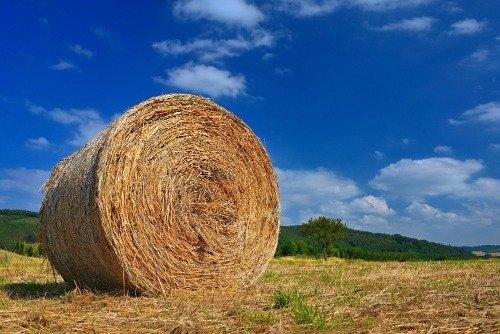
Farmers in Punjab are increasingly selling paddy stubble to biomass businesses, creating an alternative to open-field burning while generating additional income and employment in rural communities. The crop residue is collected, processed and supplied to biomass power plants, where it is used as fuel for electricity generation.
The shift offers a commercial route for managing agricultural waste in a state that has long struggled with seasonal stubble fires. However, the expansion of biomass procurement has yet to reach a scale that can significantly change air quality across northern India, according to farmers and industry analysts.
In Faridkot district, a supply chain involving farmers, machinery operators, transporters and biomass processors has developed around the collection of paddy straw. The residue is gathered from fields, processed into feedstock and transported to power plants for use in electricity generation.
One farmer featured in the report, Rajinder Singh of Sedha Singh Wala village, said selling the straw had improved his earnings and created employment opportunities for other families in the area.
The business also supports work beyond the farm. Amandeep Singh Gill, who processes paddy straw for power plants, said his operation provides livelihoods for tractor operators, drivers and labourers, supporting as many as 70 families.
Gill said setting up the business required an investment of approximately ₹4.5 crore. He estimated annual turnover at ₹7 crore to ₹8 crore, highlighting the capital requirements as well as the potential commercial returns from agricultural residue collection and processing.
The processed straw is supplied to an 18 MW biomass power plant operated by SAEL Industries in the Faridkot region. The plant uses agricultural waste as feedstock to generate electricity.
Biomass procurement offers an alternative to stubble burning
SAEL is identified in the report as India’s largest procurer of agricultural residue, with plans to purchase around 2 million tonnes during the year. This is a small share of the approximately 750 million tonnes of agricultural waste cited in the report as being generated across India annually.
The scale of the resource highlights the potential for biomass-based businesses to expand, although not all agricultural residue is necessarily available for energy use. Collection costs, transport distances, competing uses and the availability of processing infrastructure all affect how much can be brought into commercial supply chains.
Pratima Singh, a director at policy and research organisation iFOREST, said:
“Biomass-based projects are financially sound and genuinely effective.”
She cautioned that the industry is still operating below the scale required to make a visible difference to air pollution in Delhi, adding:
“But right now they’re operating at a fraction of the scale needed, so their impact isn’t yet visible in Delhi’s air.”
Farm fires remain a challenge despite earlier declines
Punjab recorded 5,114 farm-fire incidents during the 2025 paddy-harvesting season, a 53% decrease from 2024 and an 86% decline from 2023, according to government figures.
However, the latest figures show that the reduction did not continue in the 2026 season. Punjab had recorded 7,006 farm-fire incidents by 24 November 2026, around 37% more than the total for the whole of 2025, according to the report.
The figures underline that the shift towards commercial uses for paddy straw is not yet sufficient to eliminate open-field burning. Stubble fires are also only one contributor to Delhi’s winter pollution, which is affected by multiple emission sources and weather conditions.
Policy support needed to expand the biomass supply chain
iFOREST has called for measures including a minimum support price for paddy straw and standardised procurement contracts to encourage greater participation by farmers and businesses. Pratima Singh said such measures could help the sector move towards the government’s target of utilising 10 million tonnes of straw annually.
A larger and more predictable market for agricultural residue could support investment in collection machinery, storage, processing facilities and biomass power generation. It could also provide farmers with an additional revenue stream while creating rural employment.
The experience in Faridkot illustrates how agricultural waste can become a commercial energy resource. But expanding this model across regions will depend on reliable procurement arrangements, viable logistics and sufficient demand from biomass-based industries.