


India has rolled out operational guidelines for the ₹23,731 crore GOBARdhan scheme, establishing an assured offtake mechanism for compressed biogas (CBG), mandatory CBG procurement obligations for city gas distribution (CGD) companies and a long-term administered pricing framework for producers.
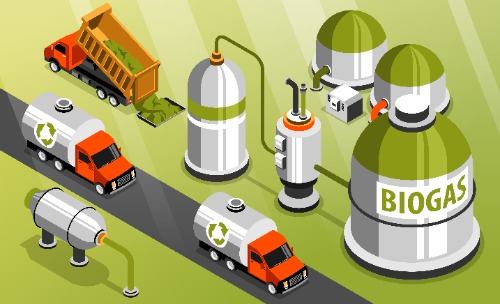
The scheme, approved by the Union Cabinet in August, is designed to scale up India’s CBG sector by converting agricultural residues, cattle dung, press mud, municipal organic waste and other biomass resources into clean fuel and organic manure. It will run from FY2026-27 to FY2035-36.
CBG producers get assured market access
The new framework establishes a dedicated offtake mechanism intended to provide greater demand visibility to CBG producers. Up to 100% of CBG available for sale can be covered by the offtake arrangement, subject to technical and operational feasibility.
A mandatory CBG obligation has also been introduced for CGD entities supplying the CNG transport and domestic PNG segments. The obligation will rise from 3% in FY2026-27 to 4% in FY2027-28 and 5% from FY2028-29 onwards.
The government has positioned the obligation as a mechanism for creating a predictable demand signal for the CBG industry. The Cabinet announcement said consistent implementation across CGD networks is intended to support project bankability, capacity utilisation and private investment.
Government sets administered CBG price
The guidelines introduce an administered CBG price (ACP) of ₹2,110 per million British thermal unit (MMBTU). The price framework has a minimum 10-year horizon, extending to March 31, 2036, unless extended or modified.
The government will also provide CBG affordability support of up to ₹10 per kg for 10 years to help bridge the affordability gap, according to the reported guidelines.
The Petroleum and Natural Gas Ministry has separately said the ₹2,110/MMBTU figure is the procurement price paid to CBG producers and is not the retail price directly paid by CNG or household PNG consumers. It said government affordability support and pooling across a wider domestic gas base are intended to limit the impact on consumers.
Take-or-pay rules introduced
The framework also sets contractual obligations for both CGD entities and CBG producers.
There will be no take-or-pay obligation for a CGD entity during the first year. From the second year, the CGD entity will have a take-or-pay obligation of up to 90% of its annual nominated quantity.
CBG producers, meanwhile, will face a supply-or-pay obligation of up to 50% of their annual contracted quantity from the second year.
These provisions establish minimum performance obligations on both sides of the CBG supply chain while providing a defined framework for long-term procurement contracts.
Financial support for new and upgraded plants
The guidelines provide financial assistance for CBG production capacity.
New CBG plants will be eligible for assistance of ₹1.25 crore per TPD of eligible CBG capacity, subject to an overall ceiling of ₹30 crore per project. Existing biogas plants upgraded to produce CBG can receive ₹0.60 crore per TPD, capped at ₹5 crore per project, according to the newly reported guidelines.
The Cabinet’s earlier announcement had described GOBARdhan as providing capital assistance of up to ₹2 crore per TPD for eligible greenfield CBG projects, covering core plant machinery as well as feedstock aggregation, organic manure processing and value-addition assets. The detailed guideline structure therefore provides a more specific breakdown of support than the initial Cabinet announcement.
Digital monitoring made mandatory
The new framework also introduces operational monitoring requirements for beneficiaries. CBG projects will be required to have real-time monitoring, online gas-quality measurement and automatic shut-off systems.
The measures are intended to strengthen operational oversight and ensure that CBG supplied under the scheme meets specified quality and safety requirements.
GOBARdhan targets national CBG expansion
The ₹23,731 crore GOBARdhan scheme is intended to bring several existing CBG support mechanisms under a unified national framework. The government has said the programme aims to increase domestic CBG production nearly ten-fold while mobilising private investment and developing a circular bioeconomy around organic waste.
Beyond assured offtake and pricing, the broader scheme includes pipeline infrastructure, credit support and ecosystem development. The government has identified agricultural residues, cattle dung, press mud and municipal organic waste among the key feedstocks that can support the expansion of India’s CBG industry.
Bioenergy Business Analysis
The GOBARdhan guidelines address several of the commercial uncertainties that have affected CBG project development, particularly around market access, pricing visibility and capital requirements. The combination of mandatory CBG procurement obligations and a defined administered price creates a clearer framework for developers evaluating new projects.
For the wider bioenergy sector, the policy also connects waste management with fuel production and organic-manure markets. The effectiveness of the framework will depend on implementation across CGD networks, availability and aggregation of suitable feedstock, project execution and compliance with the new operational requirements.
Read also: Amravati Approves ₹100 Crore BPCL Biogas Project with 10-Tonne Daily Capacity