


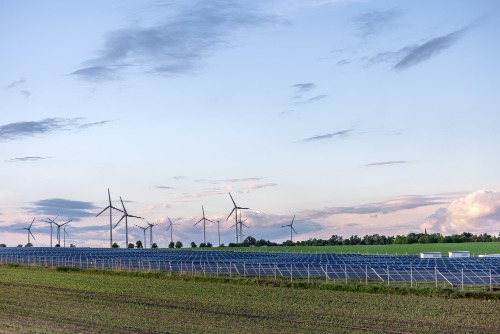
The International Union for Conservation of Nature (IUCN), with support from the Renewables Grid Initiative (RGI), has launched a global initiative to accelerate renewable energy deployment and electricity grid development while protecting biodiversity and supporting local communities.
Called Accelerating a Global Energy and Nature-positive Transition (AGENT), the initiative was launched on 17 November 2026 at the 31st Conference of the Parties to the United Nations Framework Convention on Climate Change (COP31) in Antalya, Türkiye. It operates through the Global Initiative for Nature, Grids and Renewables (GINGR) under the UNFCCC’s Global Climate Action Agenda and its Plan to Accelerate Solutions.
AGENT aims to bring together governments, cities, renewable energy companies, grid operators, investors, civil society organisations and Indigenous Peoples’ organisations to integrate biodiversity protection and community considerations into energy infrastructure planning and development.
The initiative has outlined three targets for 2030: mobilising US$30 billion for renewable energy and grid infrastructure meeting credible nature-positive criteria, conserving or restoring 10 million hectares of landscapes and ecosystems, and supporting 50 national or regional policy and regulatory frameworks that incorporate biodiversity considerations into energy development.
AGENT targets US$30 billion in nature-positive energy investment
The initiative aims to ensure that the expansion of renewable energy generation, electricity grids and energy storage does not come at the expense of ecosystems and local communities.
Its approach prioritises early spatial planning, biodiversity-inclusive decision-making, ecosystem-risk screening and application of the mitigation hierarchy. It also emphasises transparent stakeholder participation to identify and minimise potential environmental and social impacts before infrastructure projects are developed.
Through these measures, AGENT intends to connect policy development, technical assistance, financing and project implementation. It will also support countries in aligning their national energy and climate priorities with biodiversity objectives under the Paris Agreement and the Kunming–Montreal Global Biodiversity Framework.
The initiative’s three headline deliverables by 2030 are:
- Mobilise US$30 billion for renewable energy and grid infrastructure that applies credible nature-positive criteria.
- Conserve, restore or improve the management of 10 million hectares of landscapes and ecosystems associated with renewable energy and grid programmes.
- Support 50 national or regional policy and regulatory frameworks incorporating early spatial planning, biodiversity data and measurable nature-positive outcomes.
AGENT also plans to establish a demand-led technical support facility to help participating countries and project partners address challenges involving planning, permitting, project design, monitoring and investment pipelines.
Countries highlight biodiversity considerations in energy planning
The initiative’s launch included discussions involving government representatives from Ireland, Namibia, Pakistan and Uganda, highlighting different challenges associated with integrating environmental protection into energy transitions.
Ireland presented its experience in offshore renewable energy planning, including marine-area mapping, biodiversity assessments, stakeholder engagement and coordination between energy development and marine conservation objectives.
Namibia highlighted the need to ensure that renewable energy and green hydrogen investments support sustainable development and improve living standards without compromising ecosystems or communities.
Discussions also examined Pakistan’s rapid rooftop solar expansion and the associated need to address electricity grid-balancing challenges as renewable energy deployment increases.
Uganda outlined its priorities for expanding access to affordable energy and clean cooking, increasing electricity generation capacity, mobilising finance and strengthening domestic skills and technology capabilities.
The country discussions highlighted the importance of early-stage environmental assessments, reliable biodiversity data, public participation and cooperation across sectors in reducing project-related environmental risks and potential permitting conflicts.
IUCN and RGI emphasise early integration of nature protection
Speaking at the launch, Stewart Maginnis, IUCN deputy director general, said the initiative’s effectiveness would depend on whether nature is incorporated into energy planning from the outset rather than considered after key infrastructure decisions have been made.
He highlighted better planning, stronger partnerships, responsible project delivery and measurable outcomes as important indicators of AGENT’s success.
Antonella Battaglini, chief executive officer of RGI, said the initiative would provide a platform for reporting progress towards nature- and people-positive objectives, while GINGR would provide tools and methodologies to assess and measure contributions.
Timmy Dooley, Minister of State at Ireland’s Department of Agriculture, Food, Fisheries and the Marine, also welcomed the launch and IUCN’s role as the initiative’s secretariat.
Xing Zhang, senior climate specialist at the Asian Infrastructure Investment Bank (AIIB), highlighted the importance of incorporating biodiversity considerations into early project planning to reduce risks and improve the investment readiness of renewable energy and grid infrastructure.
AGENT to develop partnerships and project pipeline by 2030
The COP31 launch marks the beginning of a broader mobilisation process to identify participating countries, establish partnerships and develop a pipeline of priority projects, policy actions and financing opportunities.
The initiative will promote knowledge exchange and peer learning, documenting practical experiences to support implementation across different national and regional contexts. Progress will also be monitored through annual reporting aligned with existing national and international processes.
Through its collaboration with governments, financial institutions, energy-sector participants and conservation organisations, AGENT aims to connect renewable energy expansion with biodiversity conservation and ecosystem restoration.
Its implementation will be important as countries work towards expanding renewable energy capacity and electricity networks while addressing the environmental and social impacts associated with large-scale infrastructure development.



