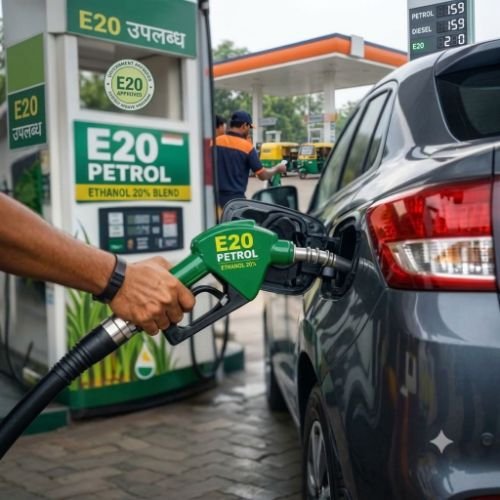
Karnataka has urged the Union government to introduce corrective measures in the implementation of its ethanol-blending programme, after state-conducted tests reportedly found ethanol concentrations above the prescribed 20% level in 11 of 14 petrol samples collected from retail outlets.
In a letter dated 17 November to Union Minister for Petroleum and Natural Gas Hardeep Singh Puri, Karnataka’s Food, Civil Supplies and Consumer Affairs Minister Rizwan Arshad called for greater transparency in fuel composition, independent testing and continued availability of lower-ethanol and ethanol-free petrol.
The highest ethanol concentration recorded in the state’s latest set of samples was 31.2%, while the reported range across the 14 samples was 13.5% to 31.2%, according to the minister. He said the state government was not opposed to ethanol blending itself, but was concerned about implementation and consumer safeguards.
“The programme cannot come at the cost of the citizens. A transition of this scale needs the whole ecosystem to be ready, including fuel infrastructure and ethanol-compliant vehicles, and that transition takes time,” Arshad said.
The letter follows a dispute between the Karnataka government and oil marketing companies (OMCs) over the state’s earlier findings of alleged excess ethanol blending. The companies and the Union petroleum ministry have questioned the sampling and testing methodology used by the state.
Karnataka disputes OMCs’ testing response
Arshad said the state government initially collected 63 petrol samples and sought information on their ethanol content from the OMCs. According to the minister, 42 test reports had been received, but none specified the percentage of ethanol in the samples. Reports for the remaining 21 samples were still pending, he said.
The state subsequently collected fresh samples from 14 retail outlets and sent them to independent laboratories accredited by the National Accreditation Board for Testing and Calibration Laboratories (NABL).
The minister maintained that authorised officers collected the samples under the Motor Spirit and High Speed Diesel (Regulation of Supply, Distribution and Prevention of Malpractices) Order, 2005. He said counterpart samples were sealed and handed over at the collection points, while fuel density measurements were recorded and signed by dealers and other authorised representatives.
The OMCs, however, have challenged the state’s earlier test findings, arguing that the October 2026 sampling exercise did not follow the prescribed statutory and technical procedures. They said they had not received the corresponding retention samples, complete outlet-wise details or laboratory reports needed to verify the results.
In a 7 November statement carried by the Press Information Bureau (PIB), the Ministry of Petroleum and Natural Gas said 893 samples tested across 27 states and Union Territories were within the prescribed ethanol-content range of 19% to 21%. The 56 samples tested in Karnataka recorded ethanol content between 19% and 20%, with an average of 19.30%, according to the ministry.
The ministry also said the certificates cited by Karnataka did not specify sufficient details about the gas chromatography method, sample dilution procedure or reference material used to validate the reported ethanol concentrations against the applicable IS 17021 standard.
The competing findings have left the reported excess-blending allegations contested. The two sides have presented different test results and disagree over whether the state’s sampling and laboratory procedures meet the applicable requirements.
Minister raises fuel transparency and consumer protection concerns
Arshad said the state initiated its investigation after receiving complaints from vehicle owners about reduced mileage, rough engine operation, damage to older vehicles and concerns about receiving less fuel than they had paid for.
He also raised concerns about variations in ethanol content across petrol samples, arguing that consumers were not being adequately informed about the composition of the fuel sold to them.
The minister specifically flagged petrol marketed as premium or high-speed fuel, which he said was being sold at prices of approximately ₹120 to ₹140 per litre, while also raising questions about the disclosure of its ethanol content.
In addition to fuel composition, the letter addressed the accuracy of petrol and diesel dispensing equipment. Arshad cited a state government survey covering 805 retail outlets, in which 768 outlets reportedly required recalibration.
Of the 3,071 dispensing nozzles tested, 2,618 showed deviations from their rated accuracy, according to the minister. He said 101 outlets were found dispensing fuel beyond the maximum permissible error and were booked, with fines totalling ₹6.66 lakh collected.
The minister also objected to the Centre’s decision to extend the mandatory verification interval for fuel dispensers from 12 months to 24 months. Karnataka, he said, would continue annual verification of dispensers through government inspectors.
Karnataka proposes five measures for ethanol policy implementation
The letter called on the Centre to introduce measures intended to improve fuel-quality oversight and give consumers greater choice.
The proposals include:
- Ethanol-content disclosure: Retail outlets should prominently display the exact ethanol percentage in each petrol grade and print the information on purchase receipts.
- Availability of lower blends: E10 and ethanol-free petrol should remain available at affordable prices alongside E20 until the vehicle fleet is fully compatible with higher ethanol blends.
- Independent fuel testing: A third-party mechanism using NABL-accredited laboratories should conduct random checks and report ethanol content.
- Consumer compensation: A dedicated fund should compensate vehicle owners whose vehicles are damaged by petrol containing ethanol above the prescribed limit, with claims assessed through authorised service centres under a time-bound process.
- Continued fuel-dispenser inspections: The state wants annual verification of petrol and diesel dispensers to continue, rather than adopting the extended 24-month interval.
Arshad said Karnataka would continue monitoring fuel quality at retail outlets and take action wherever deviations from notified standards were identified.
The exchange between the state and the Centre adds a consumer-protection dimension to India’s ethanol-blending programme. Resolving the disagreement over testing procedures and establishing a transparent system for verifying fuel composition will be important to addressing concerns about compliance as the use of higher ethanol blends expands.