


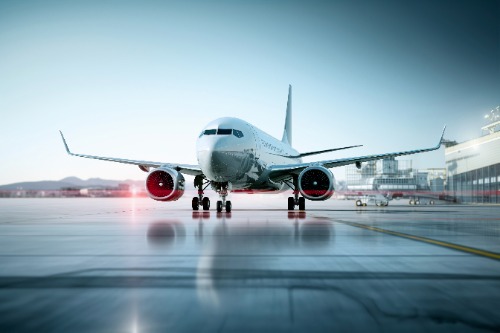
Qantas and Virgin Australia are considering ways to recover the higher cost of sustainable aviation fuel (SAF), including a potential green fuel levy added to passenger airfares, as Australia develops a policy framework for low-carbon fuels.
The proposal comes amid the Australian Government’s consultation on the use of low-carbon liquid fuels across aviation and other transport sectors. According to reporting by The Australian, submissions from both major airline groups have raised the possibility of passing some of the additional SAF cost through to passengers.
Any such levy would require a government policy decision and should not be interpreted as an existing passenger charge.
SAF costs remain above conventional jet fuel
The economics of SAF remain a major challenge for airlines and fuel suppliers. Industry estimates cited in the reporting indicate that SAF and other biofuel blends can cost two to five times more than conventional jet fuel, depending on the fuel pathway, feedstock, production scale and market.
Qantas itself says SAF is currently several times more expensive than conventional jet fuel and that the incremental cost is one of the barriers to scaling the market.
The cost difference becomes particularly important as governments consider blending requirements or other policies that would increase SAF consumption.
For airlines, higher SAF procurement costs can ultimately affect operating costs. A passenger levy is one mechanism being discussed for recovering part of those additional costs, although the final structure of Australia’s policy has yet to be determined.
Government consultation leaves levy option open
Australia’s Department of Climate Change, Energy, the Environment and Water (DCCEEW) is consulting on measures intended to increase the use and domestic production of cleaner fuels.
The current policy process forms part of a broader effort to strengthen Australia’s fuel security while developing domestic production of lower-carbon fuels. The government has also been consulting on measures relating to domestic fuel supply and resilience.
The Australian Government has previously announced $1.1 billion for the Cleaner Fuels Program, alongside broader measures intended to support domestic low-carbon fuel production.
Transport Minister Catherine King has acknowledged that increased SAF use could affect airfares, while pointing to international experience suggesting the impact on individual fares could be relatively small.
The final impact will depend on the design of the policy, the level of SAF required, production costs and the extent to which costs are shared between airlines, fuel suppliers, government support mechanisms and passengers.
Qantas targets 10% SAF by 2030
Qantas has already established long-term targets for increasing its SAF use.
The airline currently targets SAF equivalent to 10% of its fuel consumption by 2030, rising to approximately 60% by 2050. Qantas says the 2030 target would correspond to roughly 600 million litres of unblended SAF annually.
Qantas has also been purchasing SAF for international operations and investing in efforts to establish domestic production.
In May 2025, Qantas, Sydney Airport and Ampol supported the import of nearly 2 million litres of unblended SAF from Malaysia, described by Qantas as Australia’s largest commercial SAF import at the time. The fuel was subsequently blended with conventional aviation fuel for use in flights departing Sydney Airport.
Qantas says SAF currently represents around 1% of its fuel use, reflecting the limited availability and cost of the fuel.
Airlines want domestic SAF production to expand
Both Qantas and Virgin Australia have backed the development of a domestic SAF industry, which could reduce reliance on imported sustainable fuels while creating a local feedstock and production supply chain.
Qantas has supported Australian SAF production through investment and procurement initiatives and continues to advocate for a policy framework combining demand and supply-side measures.
The airline has also argued that developing domestic SAF could generate wider economic benefits through investment, feedstock supply chains and new production facilities.
For airlines, domestic production could eventually provide greater access to SAF while reducing exposure to international supply constraints. However, production costs and the availability of suitable feedstocks remain central challenges.
Virgin backs North Queensland SAF project
Virgin Australia has also supported development of domestic SAF capacity.
In March 2025, Virgin Australia and Qatar Airways partnered with Renewable Developments Australia on a proposed SAF facility in the Charters Towers region of North Queensland.
The project is designed as an ethanol-to-jet facility using sugarcane-derived bioethanol and is targeting production of up to 96 million litres of SAF annually. Virgin said the fuel would be supplied to nearby airports.
The proposed facility is expected to use KBR’s PureSAF technology and is designed around renewable energy integration.
Virgin has also participated in SAF trials using waste and residue feedstocks. Its partnership with Viva Energy included flights from Whitsunday Coast Airport using a blend containing 30–40% synthetic SAF, according to the airline.
Who ultimately pays for SAF?
The emerging debate in Australia is therefore moving beyond whether SAF should be used to how the cost of scaling it should be distributed.
A passenger levy would place at least part of the incremental cost directly on air travellers. Alternative approaches could involve government incentives, producer support, airline procurement commitments, fuel suppliers or combinations of these mechanisms.
The Australian Government’s policy challenge is to develop sufficient demand to encourage investment in domestic SAF production without creating a cost burden that undermines the competitiveness of Australian aviation.
For airlines, meanwhile, the economics will depend on the difference between conventional jet fuel and SAF prices, the required SAF volumes and the policy mechanism used to recover or offset the additional cost.
Domestic production could change the cost equation
The development of Australian SAF production could eventually alter the economics of the market.
Qantas says the scale-up of a domestic low-carbon fuel industry could create significant economic activity, while Virgin has argued that domestic SAF production would support both emissions reduction and Australia’s liquid-fuel security.
However, new production facilities require substantial capital, reliable feedstock supplies, technology deployment and long-term demand commitments. Government policy will therefore play a significant role in determining whether Australian projects can reach commercial scale.
For passengers, the immediate question is whether any future SAF mandate or requirement will result in a separately identified levy, higher base fares or another cost-recovery mechanism.
No final passenger levy has been established through the current consultation process.
Bioenergy Business Analysis
Australia’s SAF debate highlights a central issue facing the global aviation sector: SAF can be used in today’s aircraft and fuel infrastructure, but it remains considerably more expensive than fossil jet fuel. Qantas describes the incremental cost as several times that of conventional fuel, while its current SAF use remains around 1% of total fuel consumption.
A passenger levy could provide airlines with a relatively direct mechanism for recovering some additional fuel costs, but its eventual impact will depend on the final policy design and market conditions. The broader policy question is how Australia balances affordability, domestic fuel security, emissions reduction and investment in a local SAF industry. The proposed approach will also influence the bankability of future Australian SAF projects by determining how much demand and cost recovery the market can support.