


Rajasthan Governor Haribhau Bagade has called for greater production and use of ethanol, arguing that expanding the biofuel industry can reduce India’s exposure to international petroleum-market volatility and geopolitical risks.
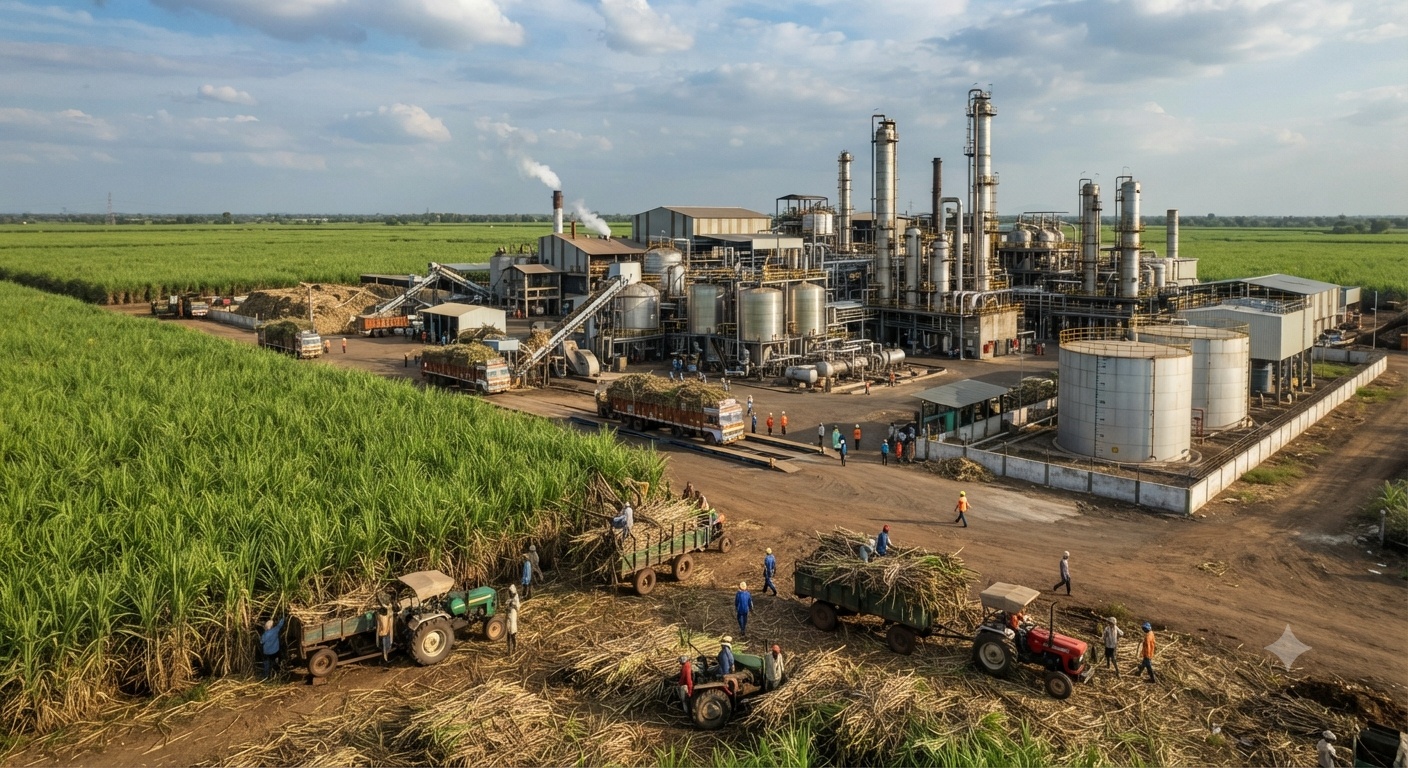
Speaking at the Bharat Ethanol Forum 2026 and three other industry conferences in Mumbai on September 28, Bagade said India should expand ethanol production from sugarcane while also developing feedstock options including maize and agricultural waste.
“Sugarcane fields should be like wells and reservoirs of ethanol. We must lead the world,” Bagade said, according to PTI.
The Bharat Ethanol Forum is being held in Mumbai on September 28–29, with its agenda covering India’s post-E20 ethanol economy, feedstocks, flex-fuel vehicles, blending economics and investment in ethanol infrastructure.
Ethanol positioned as an energy-security tool
Bagade said increased domestic ethanol production and consumption could help reduce the country’s exposure to fluctuations in international petroleum markets.
India’s ethanol-blending programme has already become a significant component of its strategy to reduce crude-oil dependence. According to the Ministry of Petroleum and Natural Gas, average ethanol blending reached 20% in ESY 2025–26, compared with about 19.2% in ESY 2024–25.
Government data published in July 2026 said ethanol blending had increased from less than 1.5% in 2013–14 to 20% in 2025–26, while domestic ethanol production capacity had expanded to approximately 2,000 crore litres.
The government has linked the programme to reduced crude-oil consumption, foreign-exchange savings and increased demand for agricultural feedstocks.
Sugar mills increasingly diversify into ethanol
Bagade, who has a background in Maharashtra’s sugar cooperative sector, highlighted the evolution of sugar mills from relying primarily on sugar production to generating additional revenue from cogeneration and ethanol.
He said sugar mills that produced only sugar had faced financial difficulties, while investments in electricity cogeneration and distilleries created additional revenue streams.
Ethanol has also become an important outlet for sugar-sector feedstocks. Government policy allows ethanol to be produced from multiple feedstocks, including sugarcane-based materials and grains.
The expansion of ethanol production has been supported by measures including administered procurement pricing, interest-subvention schemes and long-term offtake arrangements with oil marketing companies.
Ethanol supply chain extends beyond sugarcane
Bagade also highlighted the potential to produce ethanol from maize and agricultural residues rather than relying exclusively on sugarcane.
The diversification of feedstocks is relevant to the industry’s ability to expand ethanol production while managing regional differences in agricultural output and feedstock availability.
Government policy already permits a broader range of feedstocks for ethanol production, including sugarcane juice, molasses and various grains.
However, the commercial suitability of individual feedstocks depends on factors including availability, competing uses, processing economics, logistics and sustainability considerations.
Ethanol has applications beyond transport
Bagade also pointed to ethanol’s established industrial uses, including applications in chemicals, pharmaceuticals and hand sanitisers.
Recounting his experience during the COVID-19 pandemic, he said he had seen a sharp increase in demand for sanitiser and described an initiative to supply sanitiser to gram panchayats.
The example highlighted ethanol’s role as both a transport fuel and an industrial feedstock, although the scale and economics of individual applications vary.
Maharashtra minister links ethanol to sugarcane payments
Maharashtra Cooperation Minister Babasaheb Patil also spoke at the event, linking ethanol production with the financial viability of sugar mills and timely payments to sugarcane farmers.
He said sugar factories remain important to the agricultural economy and that ethanol production can provide an additional revenue stream for the sector.
Government policy has similarly linked ethanol production with the sugar industry’s ability to manage surplus sugar and improve liquidity for payment of cane dues.
India moves beyond E20 through flex-fuel vehicles
The discussions also touched on higher-ethanol fuels and flex-fuel mobility.
It is important to distinguish between India’s 20% nationwide ethanol-blending programme and higher ethanol fuels intended for specially designed vehicles.
The Union government said in July 2026 that no decision had been taken to increase the nationwide base ethanol-blending level beyond 20%. It also clarified that E85 has been introduced specifically for flex-fuel vehicles and does not represent an increase in the nationwide petrol-blending level.
India has nevertheless begun introducing flex-fuel vehicles. In June 2026, the government announced the launch of India’s first flex-fuel passenger vehicle, with the technology capable of operating on ethanol-petrol blends ranging from E20 to E100.
E85 fuel has also been introduced for compatible flex-fuel vehicles. Government information states that it is intended exclusively for specially designed FFVs rather than conventional petrol vehicles.
Ethanol blending programme has expanded significantly
India’s ethanol programme began with pilot projects in 2001, followed by the formal launch of the Ethanol Blended Petrol programme in 2003 for 5% ethanol-blended petrol in selected states and Union Territories.
The programme was subsequently expanded, while the target for 20% ethanol blending was advanced from 2030 to ESY 2025–26.
The government reported that the country achieved the 20% blending level in ESY 2025–26, five years ahead of the original 2030 target.
Bagade also recalled the early development of ethanol blending in India, including pilot activity in Maharashtra. Government historical records confirm that pilot ethanol-blended petrol projects were conducted in locations including Manmad in Maharashtra in 2001 before the national programme was introduced.
Bioenergy Business Analysis
The remarks at the Bharat Ethanol Forum underline the expanding role of ethanol within India’s energy and agricultural economy. The sector now extends from conventional sugar-based production into grain-based ethanol, flex-fuel mobility and emerging higher-ethanol fuel applications.
The next phase will involve balancing increased ethanol demand with feedstock availability, vehicle compatibility, production economics and sustainability. While E20 has become the national blending level, higher blends such as E85 are currently linked to specifically designed flex-fuel vehicles, rather than representing a nationwide change in the petrol standard.