


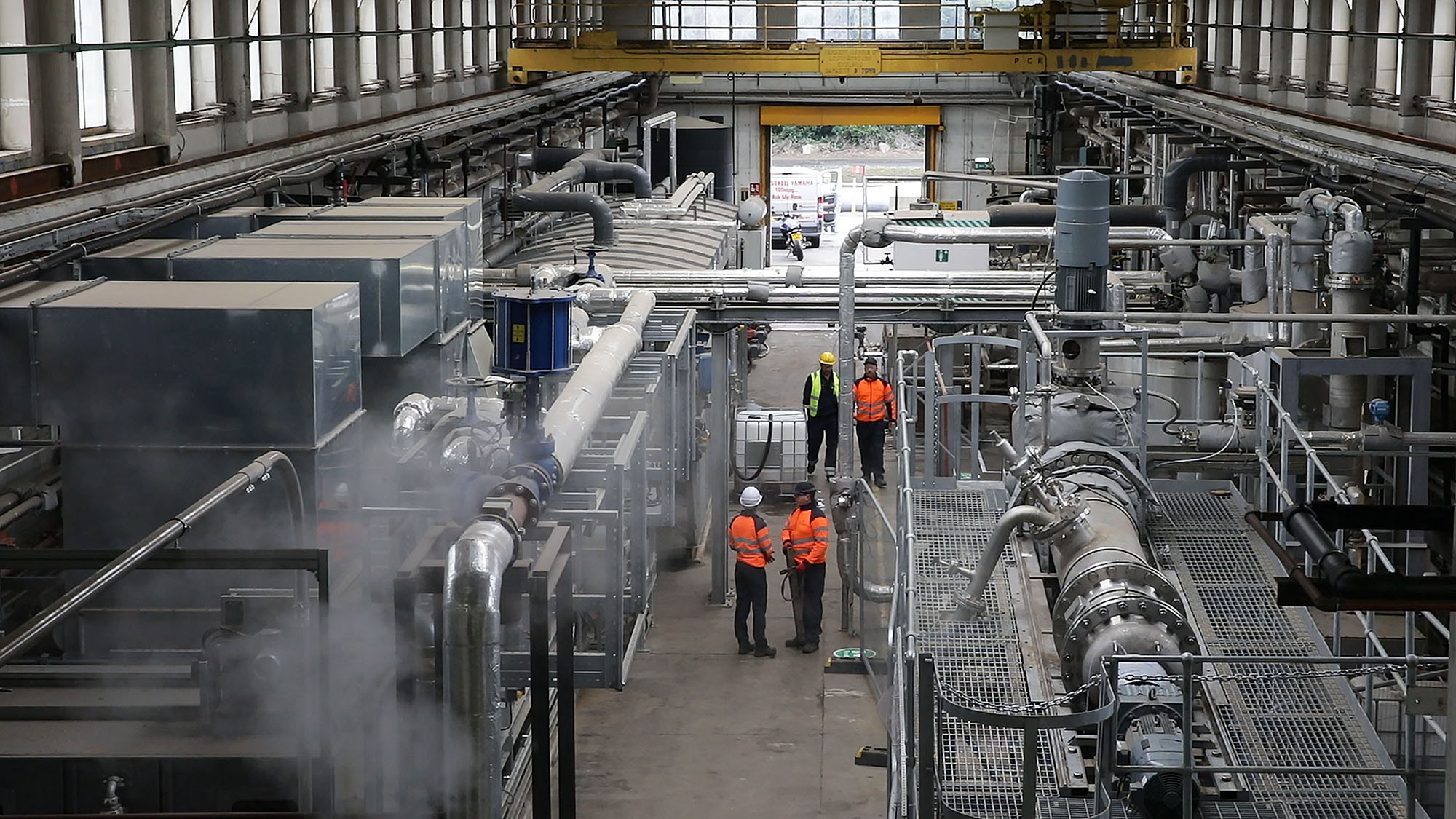
UK SAF developer Nova Pangaea Technologies has completed 72-hour endurance trials at its Teesside demonstration plant, validating its waste-biomass-to-ethanol process for sustainable aviation fuel (SAF) production as the UK developer advances plans for its first commercial-scale facility.
Key Takeaways
- Nova Pangaea achieved stable operation for production runs of up to 72 hours and reported above-target yields.
- Trials processed up to 3 tonnes of waste biomass feedstock per day, using softwood residues from timber processing.
- Project Speedbird with British Airways and LanzaJet is targeting eventual production of 90,000 tonnes of SAF and renewable diesel annually.
- Nova Pangaea says it has raised more than £21 million ($28 million) to date, while the UK government has also provided grant funding.
The Context
Nova Pangaea’s REFNOVA process converts waste biomass and residues, including wood chips, sawdust and wheat straw, into ethanol. That ethanol can then be upgraded into SAF and renewable diesel, while the process also produces biochar that the company says can permanently capture carbon.
The latest endurance trials follow smaller-scale tests conducted in early 2025, which demonstrated the process outside the laboratory. Nova Pangaea said the latest runs are intended to further validate the technology and provide data for the design of its first commercial-scale plant.
The company plans to conduct additional trials next year to “fine tune” the commercial plant design.
Project Speedbird Targets 90,000 Tonnes of Annual Output
Nova Pangaea is developing Project Speedbird with British Airways and LanzaJet to produce aviation fuel from locally sourced waste biomass. The project is expected to eventually produce 90,000 tonnes of SAF and renewable diesel annually.
Nova Pangaea claims the project could reduce net carbon dioxide emissions by up to 541,800 tonnes per year on a lifecycle basis. The company’s longer-term ambition is to construct four UK facilities producing bioethanol for upgrading into SAF.
LanzaJet’s alcohol-to-jet technology is expected to be used in Project Speedbird. The technology converts second-generation ethanol derived from feedstocks such as agricultural residues and woody biomass into aviation fuel.
UK SAF Developer Nova Pangaea Say Trials Strengthen Investor Confidence
Commenting on the latest trials, Nova Pangaea CEO Stewart Stewart said they had validated the company’s technology and should increase investor confidence as it moves toward its first commercial plant.
“The latest trials have validated our technology and should further underpin the confidence of investors on our journey towards building this first commercial plant,” Stewart said.
Stewart joined Nova Pangaea earlier this year from New York-based investment bank Javelin Capital, where he advised on green fuel opportunities.
The company says it has raised more than £21 million ($28 million) from investors including International Airlines Group, PXN Ventures, Mercia Ventures and the first Northern Powerhouse Investment Fund, alongside UK government grant funding awarded through the Advanced Fuels Fund competition.
Stewart said the use of waste biomass could help increase SAF production while supporting UK energy security and the development of a domestic industry.
“By tapping into the plentiful supplies of waste biomass, we can boost SAF production,” Stewart said.
UK Updates Eligible SAF Feedstock List
The technology trials come alongside an update from the UK Department for Transport to its comprehensive list of feedstocks eligible under the country’s SAF Mandate.
The updated list includes wastes and residues and categorises the materials eligible for use in low-carbon fuel production. The feedstock rules are particularly relevant to biomass-based SAF pathways because eligibility determines which waste and residue streams can contribute toward mandated SAF production.
Bioenergy Business Analysis
Nova Pangaea’s latest trials represent an important step in reducing the technology risk associated with its proposed biomass-to-SAF pathway. The reported 72-hour continuous runs and throughput of up to 3 tonnes/day move the process beyond laboratory-scale validation, although the company still needs further trials before finalising the design of its first commercial plant.
The economics of the pathway will ultimately depend on the availability and cost of eligible waste biomass, conversion efficiency, ethanol upgrading economics and the policy value attached to SAF. The UK’s updated feedstock list therefore matters alongside the technology demonstration: together, they shape both the potential feedstock base and the regulatory environment for future waste-biomass SAF projects.
Read Also: Jet Zero secures $30 million, POSCO investment and final approval for Townsville SAF Refinery