


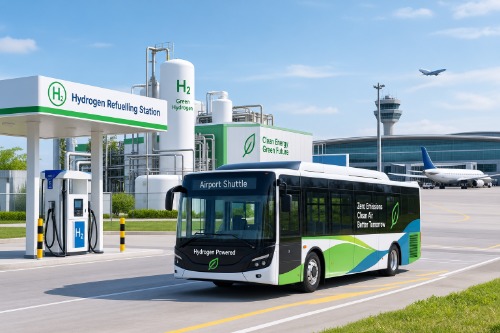
Cochin International Airport Ltd (CIAL) is preparing to procure two hydrogen-powered buses as it revives plans to deploy green hydrogen for passenger transport at its airport in Kerala. The tender is expected to be floated soon, with the airport operator also considering leasing a hydrogen bus to avoid further delays.
The move follows several months of uncertainty over the availability of suitable hydrogen-powered buses. CIAL’s green hydrogen production and fuelling infrastructure is already in place, meaning the availability of vehicles is now the key requirement before passenger operations can begin.
According to The New Indian Express report, CIAL plans to use the two buses for transporting passengers within the airport. The vehicles will be procured by CIAL, which will also be responsible for their maintenance and day-to-day operation.
Because hydrogen buses are made to order, delivery could take an estimated six to eight months after procurement, according to sources cited in the supplied material. CIAL is therefore examining a leasing option as a contingency if procurement or delivery takes longer than expected.
KPIT Technologies and Tata Motors are among the potential sources being considered for the buses. The procurement process will move through tendering and subsequent approvals before the vehicles can be deployed.
The airport operator is targeting the start of operations by the end of 2026, although the timing will depend on the procurement and delivery process.
1 MW green hydrogen facility is already ready
The bus procurement is linked to a 1,000 kW green hydrogen production and fuelling project developed by CIAL in partnership with Bharat Petroleum Corporation Ltd (BPCL).
The facility has an initial production capacity of 80 kg of green hydrogen per day. The hydrogen is intended to supply zero-emission vehicles, with airport buses identified as a primary application.
BPCL is responsible for hydrogen production, storage and dispensing under the partnership. CIAL, meanwhile, provided the land, water and green-energy resources required for the project.
BPCL began work on the facility in June 2024, while testing and commissioning were completed in January 2026. With the fuel infrastructure already commissioned, vehicle availability has become the immediate operational constraint.
The buses will not enter passenger service immediately after delivery. CIAL plans to conduct trial operations before allowing passengers to use the vehicles.
According to a CIAL source, each vehicle will have to complete 10,000 km of testing before passenger services begin. This testing period is intended to establish operational readiness before the buses are introduced into regular airport transport duties.
The approach means that even after the vehicles are delivered, additional time will be required before the hydrogen-powered passenger service becomes operational.
CIAL’s consideration of a leased bus could provide an alternative route if purpose-built vehicles cannot be delivered within the required timeframe. However, the supplied source material does not specify the commercial terms or duration of any potential lease.
Why hydrogen buses matter to the airport project
The development illustrates the importance of matching hydrogen production infrastructure with suitable end-use vehicles. In CIAL’s case, the production and fuelling side of the project has already reached the testing and commissioning stage, while vehicle procurement remains the critical step before the system can operate as an integrated transport service.
The project also places hydrogen directly into an airport mobility application, where buses can provide a relatively defined and centralised fuel demand. The airport environment gives the hydrogen facility a specific transport use rather than relying on an external market for the fuel.
At the same time, the delay in securing suitable buses highlights a practical challenge for hydrogen mobility projects: infrastructure deployment alone does not guarantee immediate vehicle adoption. Vehicle availability, procurement timelines, testing requirements and operating arrangements all have to progress together.
Bioenergy Business Analysis
CIAL’s next phase is less about building hydrogen infrastructure and more about connecting that infrastructure to a functioning transport operation. The project already has a production facility, storage and dispensing capability, but its commercial and operational value depends on getting compatible buses into service.
The procurement process will therefore be an important test of how quickly hydrogen mobility projects can move from commissioned infrastructure to actual vehicle deployment. CIAL’s willingness to consider leasing also shows how project developers may need alternative procurement models when specialised zero-emission vehicles have limited availability.
For airport operators and other fleet owners considering hydrogen, the project highlights a broader lesson: fuel supply, vehicles, maintenance and operational testing need to be planned as one system. CIAL’s target of beginning service by the end of 2026 will depend on successfully closing that final gap.
Read also: GH2 India Green Hydrogen Masterclass examines gap between hydrogen ambition and project delivery