


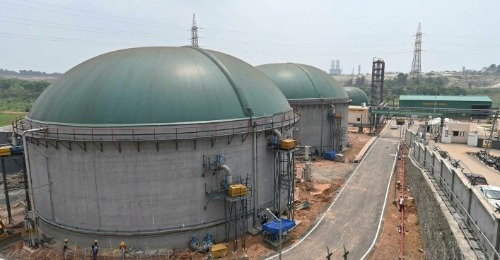
The Kochi Corporation and BPCL-KR remain at odds over the operational performance of the 150-tonne compressed biogas (CBG) plant at Brahmapuram, Kerala, more than seven months after its commissioning. The civic body has raised concerns about repeated shutdowns, inadequate waste-processing performance and the volume of rejects generated, while BPCL-KR has attributed the problems to poorly segregated and contaminated feedstock supplied to the facility.
The disagreement highlights two interconnected challenges for municipal bioenergy projects: maintaining consistent plant operations and ensuring that incoming waste meets the quality requirements for biological processing. The dispute has also coincided with proposals for additional waste-treatment infrastructure at Brahmapuram, prompting political disagreements over the management and future use of the site.
Brahmapuram CBG plant faces operational challenges
The 150-tonne facility was intended to process biodegradable municipal waste and produce compressed biogas. However, the Kochi Corporation has complained that recurring interruptions have disrupted waste disposal and that the plant has yet to achieve its designed operating capacity consistently.
BPCL-KR, the plant operator, has countered that the quality of waste delivered to the facility is a major cause of the problem. According to sources at the company, mixed waste and other contaminants frequently obstruct machinery, requiring operations to be stopped while workers manually clear the system.
The company has also pointed to instances in which incoming waste allegedly included animal carcasses, underscoring concerns about the effectiveness of waste segregation before collection and delivery.
BPCL-KR sources said the operator shares vehicle registration numbers with the Corporation to help identify the areas from which improperly segregated waste has been collected.
Dispute over waste rejects and processing capacity
Kochi Mayor V.K. Minimol acknowledged that inadequate segregation, particularly in West Kochi, remains a significant concern. The Corporation plans to hold members of Haritha Karma Sena, the waste-collection workforce, accountable for mixed waste and has directed junior health inspectors to monitor waste more closely before it is loaded onto collection vehicles, as per The Hindu report.
However, Minimol argued that poor segregation alone does not account for the volume of material rejected after processing.
She said the agreement permitted a reject rate of 6% to 8% of the total feedstock. According to the mayor, there have been instances in which the operator reported treating 110 tonnes of waste while generating as much as 40 tonnes of rejects.
Such figures, if confirmed against operating records, would indicate a substantial gap between the quantity of waste reported as treated and the amount of material that can be processed into useful outputs. The available information does not establish the composition of the reported rejects, the measurement methodology or whether the quantities relate to the same reporting period.
The Corporation currently lacks a dedicated facility to process the rejects generated by the CBG plant. As a result, it has prioritised a proposed 50-tonne composting facility to manage this material.
Additional waste-treatment facilities proposed
The Corporation is also negotiating with Bhumi Green Energy, which is engaged in biomining legacy waste at Brahmapuram, to process the plastic fraction separated from the plant’s rejects.
Biomining involves the excavation, separation and recovery of materials from accumulated waste, including plastics and other recoverable fractions. Processing the plastic component of the CBG plant’s rejects could help reduce the quantity requiring disposal, depending on the material’s composition and suitability for recovery.
Separately, the Corporation has proposed a new facility to treat 150 tonnes of biodegradable waste. The proposal submitted by G3 Renewables Private Limited was approved through a vote on 14 August, amid strong opposition from the Left Democratic Front (LDF).
Minimol said the additional capacity had become necessary to address the shortfall in waste-treatment capacity at the existing CBG facility.
The proposals come as the Corporation seeks ways to manage incoming biodegradable waste alongside the residual material that the current plant cannot process. The effectiveness of this approach will depend on how the proposed facilities are designed, how their feedstock requirements differ and how the resulting waste streams are managed.
Political disagreement over Brahmapuram’s future
The operational dispute has also become a point of political contention within the Corporation.
V.A. Sreejith, the LDF parliamentary party leader, accused the United Democratic Front (UDF)-led council of undermining the existing CBG plant to advance the interests of private parties seeking land at Brahmapuram. He alleged that the proposed new facility was being promoted on the basis of problems at the existing plant.
Sreejith also said that the council’s request to the Chief Minister for a high-level meeting to address the CBG plant’s operational difficulties had not yet resulted in action.
These allegations represent the LDF leader’s position and have not been independently established by the information available. The dispute therefore extends beyond plant performance to questions about the Corporation’s waste-management strategy, proposed infrastructure investments and decision-making at Brahmapuram.
Bioenergy Business Analysis
The Brahmapuram dispute illustrates why municipal compressed biogas projects depend on more than installed processing capacity. Reliable feedstock supply, effective source segregation, machinery availability and a workable system for handling rejects are all necessary to sustain operations.
The plant was inaugurated on 27 February 2026 and was designed to process 150 tonnes of source-segregated biodegradable municipal solid waste per day. At its designed capacity, BPCL said the facility would produce 5.6 tonnes of compressed biogas and 28 tonnes of organic manure daily.
The reported reject volumes raise an important operational question. If 110 tonnes of waste are treated and 40 tonnes become rejects, the residual material represents a substantial share of the reported input. However, the figures alone do not establish plant efficiency: the composition of the rejects, the treatment process, the moisture content and the accounting method would need to be examined before drawing firm conclusions.
For the wider Indian CBG sector, the central lesson is that installed capacity should not be treated as equivalent to effective waste-treatment capacity. The commercial and environmental value of a municipal bioenergy project depends on its ability to process suitable feedstock consistently while managing digestate, rejects and other residual streams responsibly.